Top 5 Mistakes to Avoid When Renting a Storage Unit

Admin • August 19, 2025

Top 5 Mistakes to Avoid When Renting a Storage Unit

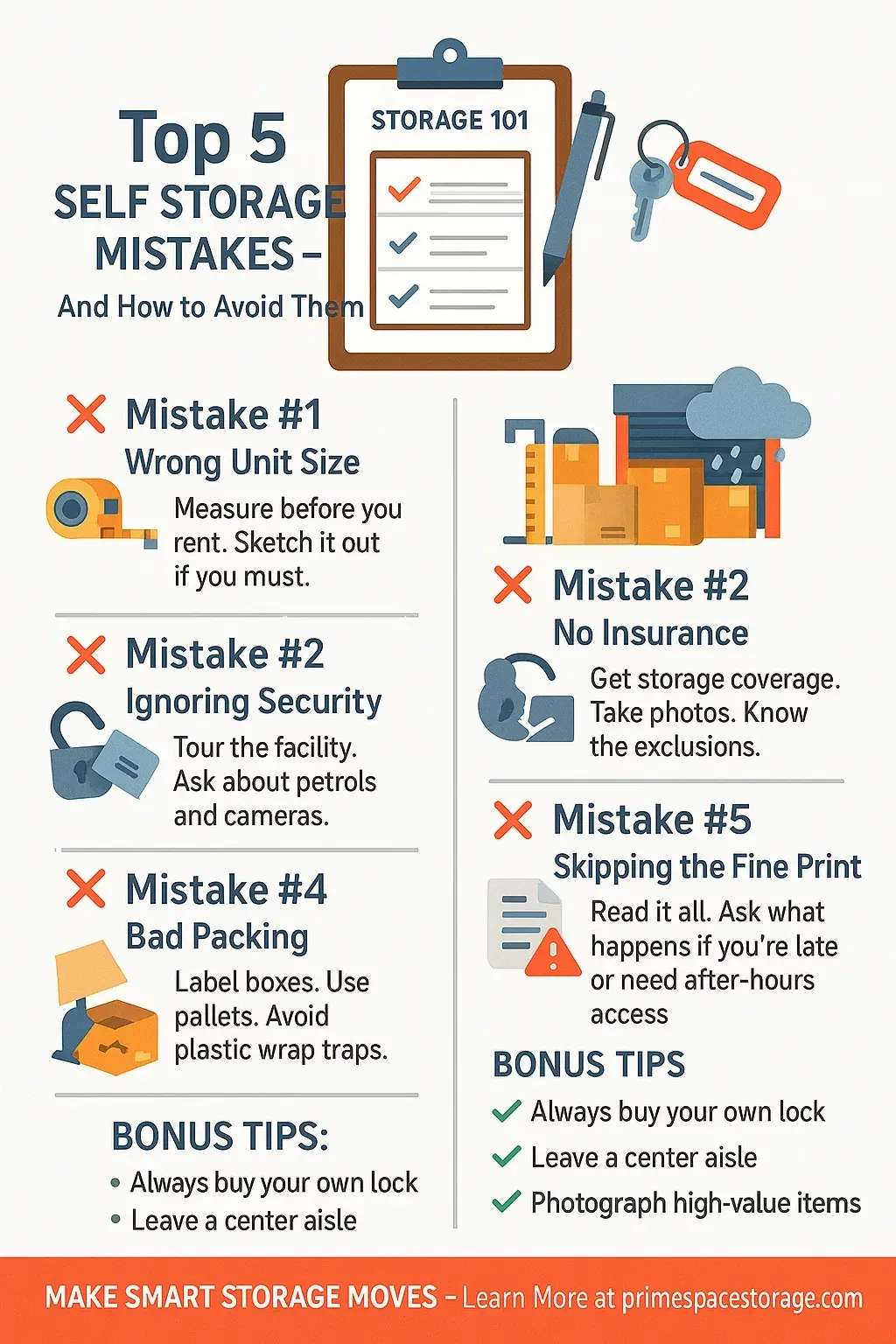
Infographic on self-storage mistakes: wrong size, ignoring security, no insurance, bad packing, fine print.

You don’t always get to plan things the right way. Sometimes you’re in the middle of a move. Or maybe your place just isn’t big enough. Suddenly, you’re looking up storage units at 11 p.m. It feels like one more thing to check off a list. You scroll, you click, you book something that looks clean and affordable. That’s it. Done.


But later—after the lease is signed or the boxes are stacked—you realize it wasn’t the right choice. Maybe it’s too small. Or too big. Or too far. Or the contract has fees you didn’t notice. It’s not always a disaster. But it’s rarely great.


I remember a friend doing this during her move. She rented a unit without seeing it. Showed up with a truck full of furniture and ended up having to leave half of it outside while we tried to repack. She was stressed. The sun was brutal. We had to rent a second unit. It cost more than just money.


That kind of mistake doesn’t make you stupid. It just makes you rushed. And tired. Which is most people, most of the time.


Here’s where that rush tends to lead. These are some of the most common self storage unit mistakes people make, even with the best intentions.


1. Picking the Wrong Storage Unit Size


Most people guess. About how much space they’ll need. About how many boxes they’ll have. About whether that old dresser can stand on its side. You think it’ll fit. You hope it will.


Wrong size unit selection leads to either wasted space or crammed, damaged items. Storage companies offer size guides, but they’re general. They don’t know you still have four bins of winter coats or that your bed frame doesn’t come apart. And when you guess wrong, you end up jamming things in or paying for empty space. Neither feels good.


Measure what you’re storing. Sketch it out if you have to. Tape out the unit size on your living room floor. It sounds dumb, but it works. A 5x10 might hold a one-bedroom’s worth of stuff, but only if you pack smart. A 10x20 might swallow you whole if you’re just storing holiday decorations.


Look at the space. In person, if you can. Some facilities will let you walk around. That helps more than any website slider ever will. Accurately assess how many square feet you truly need by examining your stored items and speaking with your self storage facility.


2. Forgetting Insurance


You rent the unit. They give you a code for the gate. Maybe there’s a camera above the entrance. It feels safe. So you move your things in and forget about them. Until something goes wrong.


A pipe bursts. A break-in happens. A rat nest. And then you find out the facility doesn’t cover your belongings. Only the structure. Only their part.


It’s not uncommon. A lot of renters assume they’re covered. Some are, through homeowner’s or renter’s insurance, but only if you checked the fine print or added extra coverage. Others aren’t. And that’s when things get expensive.


Most storage places offer optional insurance. It’s usually ten or twenty bucks a month. It’s not perfect, but it helps. Look at the coverage limits. Look at the exclusions. Ask what’s actually included. Some policies don’t cover electronics. Or water damage. Or vermin.


Adequate coverage is essential to protect sensitive items and ensure your self storage experience remains safe. If you're storing anything that matters, take photos before you box it up. Make a list. Just in case.


3. Not Asking About Security


It’s awkward to ask about crime. So people don’t. They just assume the cameras work and the fences stay locked. They assume the manager is on-site. That someone’s watching the monitors. Or patrolling.


But sometimes, no one is.


I talked to someone once who lost heirlooms. Not because she was careless, but because the unit was on the edge of town, and the gate lock was broken for weeks. No one fixed it. No one told her. The theft wasn’t even noticed until she came back.


Storage facility security features such as gated access, lights, and cameras are not all created equal. Security matters more than people think. Especially when you’re not around to check on your stuff.


Tour the place if you can. Notice the lights. The locks. The people. Are there cameras? Are they real? Are they recording?


Read the reviews. Not the five-star ones. The angry ones. They’ll tell you what breaks. And what happens when it does.


If nothing else—buy your own lock. A good one. Not a flimsy key lock from the dollar bin. Something that takes effort to cut. Most thieves won’t bother if it looks like work.


4. Packing Like It’s Temporary


You think it’s just for a month. Maybe three. Maybe until the house closes. So you throw things intoboxes. You don’t label them. You don’t wrap the glassware. You stack them wherever they fit.


Later, when you’re tired and trying to find a winter coat in January, it all blends together. Damp cardboard. Mystery boxes. Furniture legs scratching against boxes of books. You find things broken. Or mildewed. Or worse.


Pack like you care. Even if you’re rushing. Use plastic bins if you can. Wrap fragile stuff in blankets. Elevate things off the floor with a pallet or even old towels. Label everything. Even if it’s just “kitchen things” or “tools.”


Labeling boxes and keeping a detailed inventory can make your self storage unit more manageable and prevent mold growth and damage to fragile items. Make an aisle down the middle if the unit is deep. So you can reach the back without climbing.


This isn’t about being perfect. Just slightly less frustrated in six months when you come back.


5. Not Reading the Contract


You sign something. You assume it’s standard. And then one day, you show up and your unit is locked with a red tag and you’re told your stuff is up for auction next week.


Happens more than you think.


Storage contracts are loaded with clauses. Late fees. Lien rights. Rules about what you can and can’t store. Auto-renewals. Limited hours. Some places don’t allow access after 7 p.m. Others charge you for lost keys. Or increase rent without notice after the third month.


Read it. Really read it. Ask questions. Write down the answers. Don’t be embarrassed to say, “Can you explain this line?”


The self storage industry standard contract contains fine print about access hours, late fees, and rent changes. Carefully review everything. It’s easier than arguing later. Especially when you’re trying to get your grandmother’s china out before the auction starts.


You Don’t Need to Nail Everything


Just enough of it.


Know what you’re storing. Measure. Ask about security. Buy the insurance. Pack like you’ll care later. Glance at the contract before you sign.


Avoiding these common self storage mistakes can greatly improve your self storage experience and keep your stored items protected. It won’t be perfect. But you’ll spend less time regretting it. Which is probably the best you can hope for when it comes to rented concrete rooms and keys that don’t quite fit.


If you’ve made any of these mistakes—same. You’re not alone.

Decluttering? Here's Why a Storage Unit Helps You Stay Organized
By Josh Summerhays December 11, 2025
Reclaim your space and peace of mind. PrimeSpace Storage helps you clear clutter, store belongings safely, and make your home feel like home again.
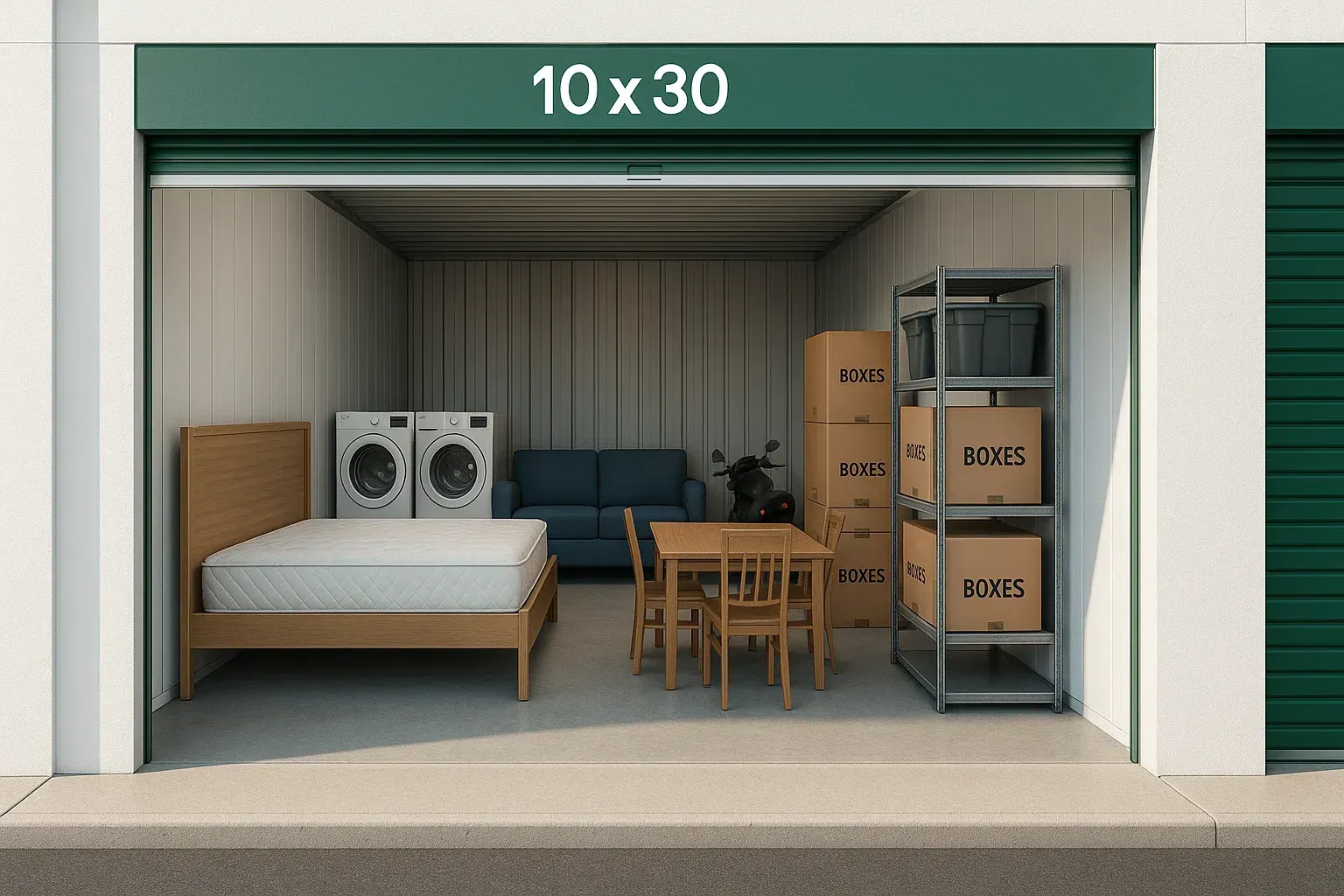
open 10x30 storage unit with household furniture and other items
By Josh Summerhays December 11, 2025
A 10x30 storage unit represents one of the most versatile and spacious options available, offering a perfect balance of capacity for users.
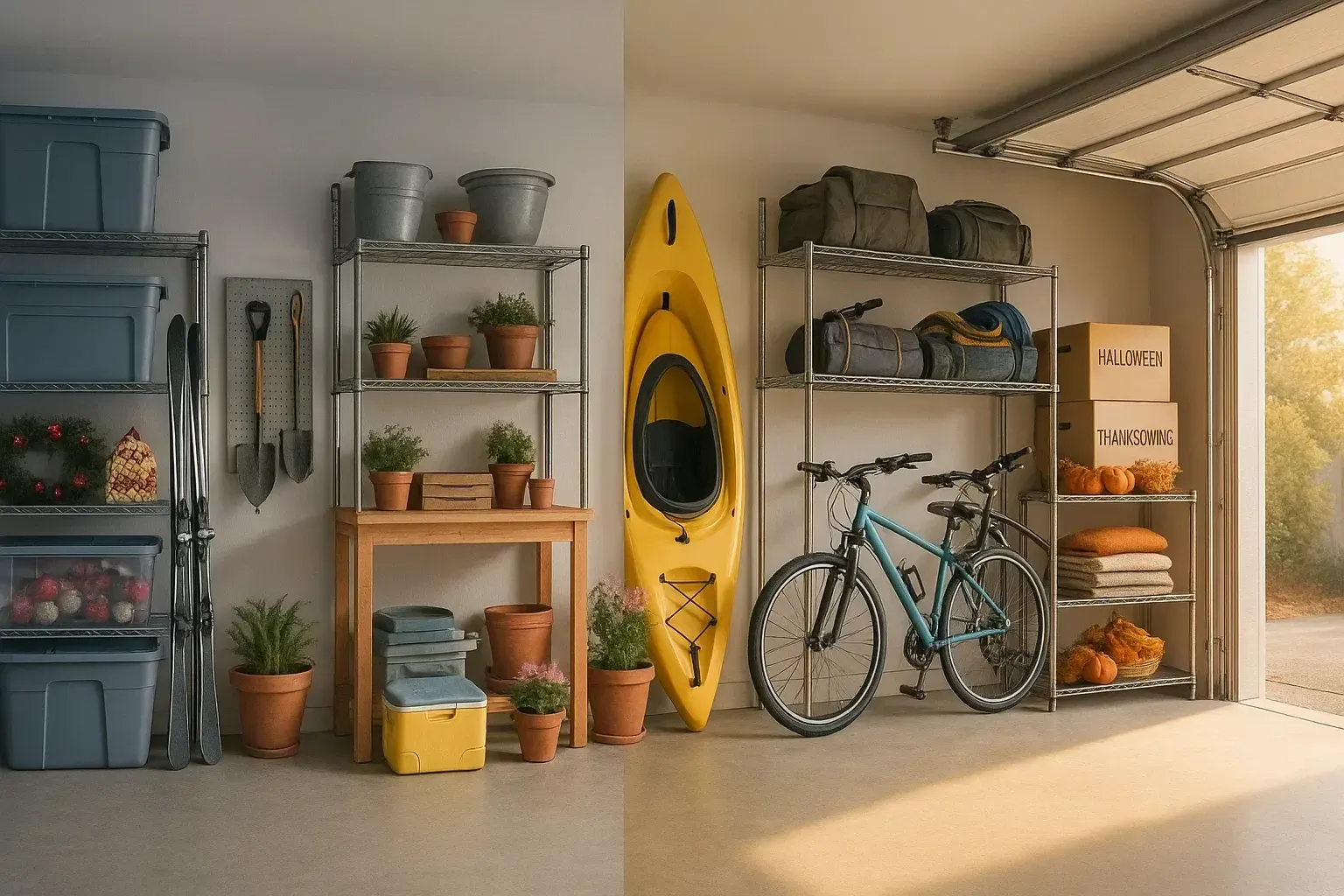
12-month storage calendar with seasonal bins for holiday décor, winter coats, etc
December 11, 2025
Get organized year-round with this 12-month storage calendar. Learn when to store, rotate, and retrieve seasonal items for a clutter-free home.
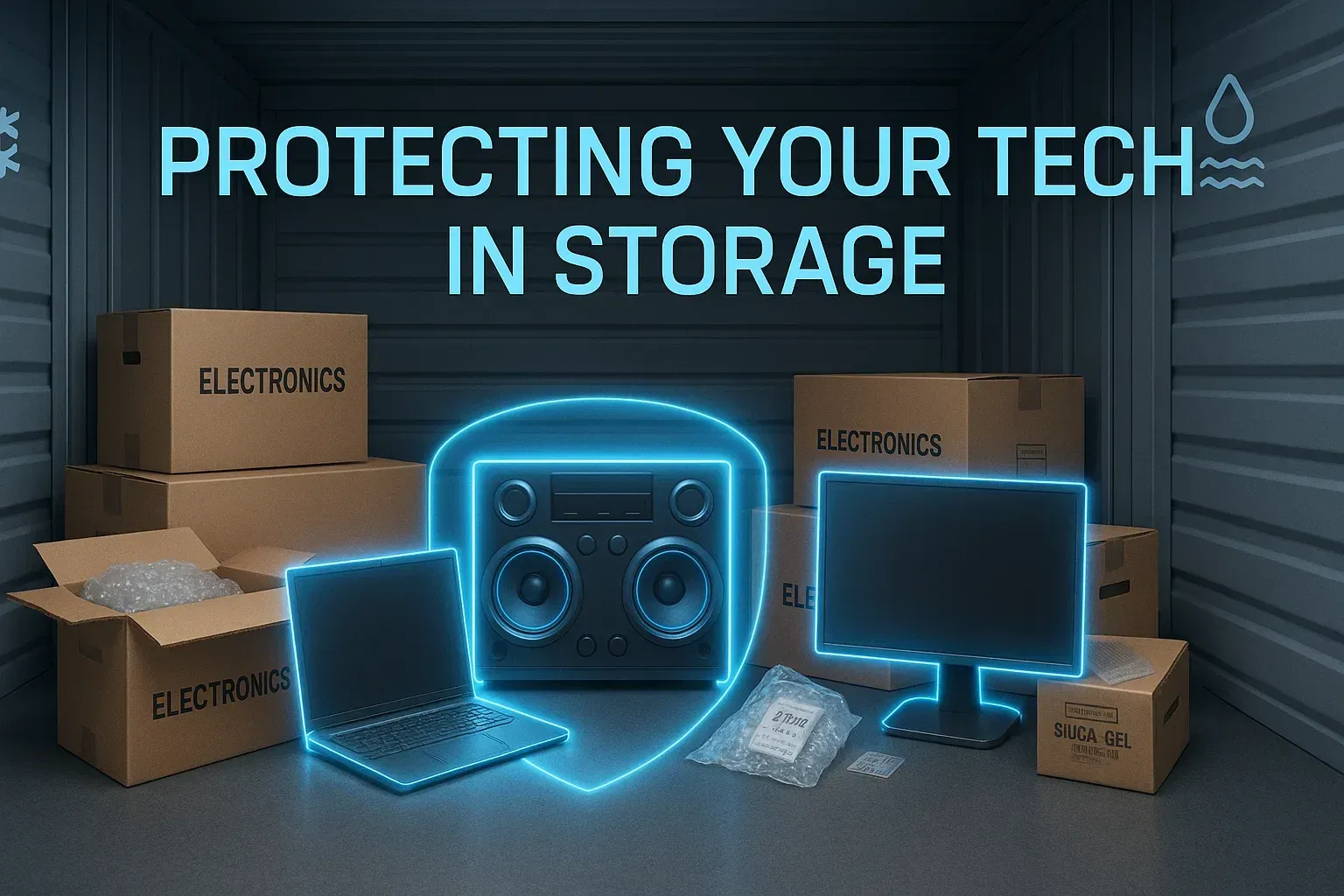
graphic of common personal electronics in a storage unit
By Josh Summerhays December 11, 2025
Devices do not forgive sloppy handling. Replacing a vintage stereo or a custom gaming tower is expensive, and some pieces are impossible to find again. With a basic plan, even a storage calendar , and a little patience, you can pull everything back out later, plug it in, and feel that quiet relief when the screen lights the way it should. Before we get started on electronic storage, know that climate-controlled storage is a great option to store furniture without damage , as well as for small business who need self storage . Understanding the Risks Storing electronics comes with challenges. Devices face threats in a storage facility that can turn a working unit into a dead weight. Temperature fluctuations make materials expand and contract. Internal components such as solder joints weaken, while sensitive components like circuit boards can fail under stress. Humidity is worse. Moisture creeps into seams, encourages corrosion, and raises humidity levels that damage sensitive electronics. Dust isn’t neutral either—it settles into vents, clogs fans, and coats circuit boards. Even static electricity or electrostatic discharge can destroy a chip instantly. Pests and rodents can chew wires, leading to physical damage. The value here isn’t just monetary. Valuable electronics often hold important data or memories. A computer may contain irreplaceable photos and records. Protecting them with electronics storage practices ensures your valuable devices are stored properly and remain functional. Choosing the Right Storage Unit The room you pick makes a difference. A climate-controlled storage unit protects electronics against harmful effects of extreme temperatures and extreme cold or high temperatures. Climate controlled storage keeps the air conditioning steady, prevents condensation, and maintains safe humidity levels. Most experts recommend you choose climate-controlled storage if you’re storing electronics for more than short term storage. Climate controlled units provide the perfect solution for keeping devices stable. Security also matters. Electronics are easy to resell, so pick a self-storage unit with security cameras, gated entry, and lighting. The right storage unit should also provide extra protection with enough extra space for airflow. Remember: storage units offer peace of mind only when chosen carefully. Preparing Electronics for Storage Preparation is most of the job in packing electronics. Start by cleaning each device—use compressed air to remove dust and a cotton cloth to wipe screens. Always remove dust before boxing items. Back up important data before packing. Losing files is worse than replacing a device. Store backups on the cloud or external drives. Remove batteries from all devices. A leaking cell can damage components permanently. Always store batteries separately in cool, dry places. This applies to laptops, remote controls, and digital cameras. Packing Electronics Properly Whenever possible, use original packaging. If that’s not available, use sturdy boxes and protective packing materials like foam, bubble wrap, and packing paper. Wrap sensitive electronics in anti-static bags to protect them from static electricity. Even loose circuit boards or computer monitors benefit from this. Storing electronics in a sealed box can help protect them from dust and environmental hazards. Add silica gel packets inside boxes to control humidity levels and replace them when they reach saturation. This extra step helps keep electronics safe and prevents moisture from harming sensitive components. Screens should stay upright. Use bubble wrap or blankets to prevent scratches. For desktops, secure heavy internal components separately to avoid rattling inside. Always properly store devices with care to prevent scratches and other damage. Storage Best Practices Placement inside the storage unit matters. Never set devices directly on the floor—use pallets or shelves for extra protection. Keep valuable electronics away from storage unit doors, where temperature fluctuations are worst. Store your electronics in labeled boxes. Keep an inventory list with serial numbers to simplify insurance claims later. This also helps if you need to store items long term or want to test devices periodically. Periodically inspect devices for corrosion, pests, or other issues. Replace silica gel packets when needed. Also, consider testing stored items occasionally to make sure they still work. Insurance for Stored Electronics Even when electronics are stored properly, things happen. Insurance for stored electronics provides coverage if a storage facility is damaged by fire, floods, vandalism, or other extreme conditions. Insuring expensive electronics protects you from unexpected losses. Insurance for stored electronics can often be purchased directly from your storage company. Some providers even offer gadget insurance that covers other electronics excluded under renters or homeowners policies. Keep an inventory list with receipts and photos to simplify any insurance claims. Always review deductibles and exclusions—some policies may not cover theft or mysterious loss. Conclusion Learning how to store electronics in storage unit settings comes down to planning. Clean devices, remove batteries, use anti-static bags, add silica gel packets, and always rely on a climate-controlled unit. Keep an updated inventory list for insurance and store your electronics in a way that allows airflow and avoids extreme conditions. When electronics are stored properly, you prevent scratches, reduce harmful effects from dust and heat, and keep sensitive electronics safe until you need them again. For many, the small cost of climate-controlled storage is the perfect solution—offering both peace of mind and protection for your most valuable devices.

Staged living room with minimal furniture after using self storage to declutter before selling a hom
November 20, 2025
Discover how decluttering with self storage, professional home staging, and added storage space can help your house sell faster and for a higher price.
A serene lake surrounded by lush green grass and dense evergreen forest under a bright blue sky with fluffy white clouds.
By Jon Knoder November 18, 2025
Irmo offers a practical lifestyle supported by reasonable costs, strong schools, outdoor recreation, and a friendly residential environment. Learn more!
Prohibited Items in Self-Storage: What You Can't Store
By Freda Levi August 21, 2025
Wondering what you can’t put in a storage unit? From gas cans and paint to food, plants, and valuables, here’s what facilities ban and why the rules matter.
How to Store Furniture Without Damage
By Freda Levi August 21, 2025
Learn how to store furniture in a storage unit the right way. These tips help protect wood, leather, and upholstery from damage, moisture, and pests.
Business Storage 101: How Small Businesses Use Self-Storage
By Admin August 20, 2025
Discover how small businesses use self storage to cut costs, stay organized, and scale without long-term leases. Flexible, secure storage that works when you need it.
Why College Students Love Self Storage (and How to Use It Right)
By Admin August 19, 2025
College students love self storage for the flexibility and affordability. Learn the top reasons it’s so popular and how to use it the right way.
Show More